Transform Your Workspace Intentional Spaces Minimalism Tips

In today’s fast-paced world, the clutter surrounding us can significantly impact our productivity and mental well-being. The rise of minimalism has prompted individuals to seek out intentional spaces that foster creativity and focus. By transforming our work environment, we can create a sanctuary that not only enhances our efficiency but also promotes a sense of calm.
With a minimalistic approach to organization, you can readily achieve several benefits, including:
- Reduced distractions: Clearing out unnecessary items creates a more focused atmosphere.
- Enhanced creativity: A clean workspace can stimulate imaginative thinking.
- Improved mental clarity: Simplifying your environment leads to greater clarity in thought processes.
- Increased productivity: Organized spaces promote a more efficient workflow.
This article will guide you through the Top 5 tips that can help you create an intentional workspace, allowing you to embrace minimalism and, ultimately, transform your work life for the better.
Top 5: Creating Intentional Spaces – How Minimalism Can Transform Your Workplace
Is your workspace drowning in a sea of disorder, leaving you feeling overwhelmed and unfocused? In a world that’s constantly moving at breakneck speed, the need for intentional spaces is becoming more pronounced than ever before. Minimalism, often misconstrued as just an aesthetic choice, holds the power to reshape not just your surroundings but also the way you function within them. This article delves into five transformative strategies that minimalism employs to enhance your work environment, fostering clarity, efficiency, and peace of mind.
5. Declutter: Start with the Essentials
Embarking on a quest for a minimalist workspace begins with one crucial step: decluttering. The landscape of your workplace can often resemble a battlefield, strewn with unused or unnecessary items that vie for your attention almost as ferociously as your actual tasks. By dedicating time to distinguish what truly serves your daily workflow, you can create a haven of productivity.
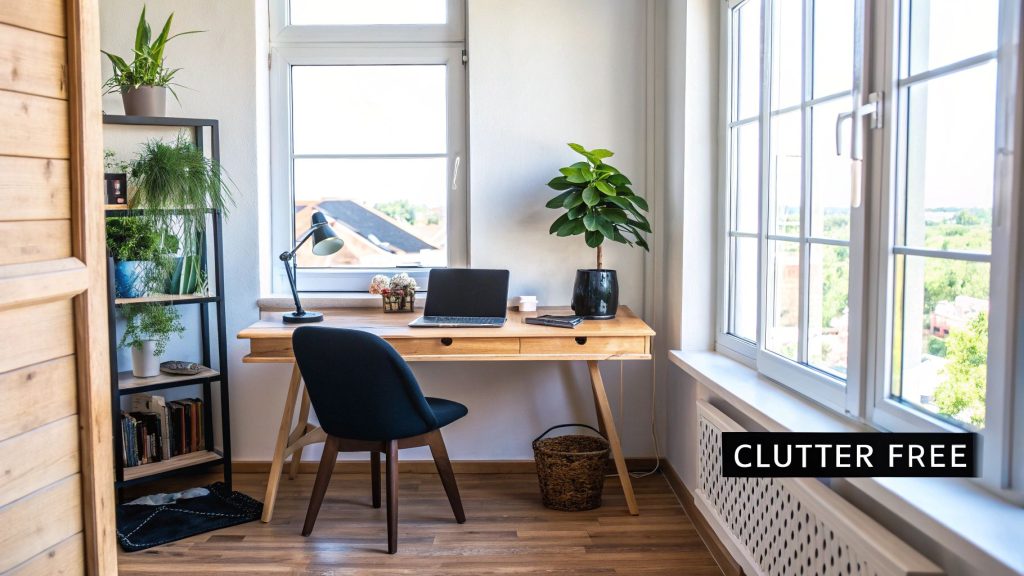
Here’s a step-by-step roadmap to decluttering:
- Gather everything from your workspace, even the items tucked away in drawers and cabinets.
- Sort these items into three categories: keep, donate, and dispose. Ask yourself, “Do I use this item regularly?” and “Does this item facilitate my work?”
- For the items you choose to keep, assign a specific place for each, ensuring easy access and a streamlined work process.
Decluttering not only ups the aesthetic ante of your workspace but also significantly enhances your focus by removing potential distractions.
4. Organize with Intent
Once the noise of clutter has been hushed, the next step in the minimalist journey is to organize with intent. This involves purposefully designing the layout of your workspace to align with your professional needs. By designating areas for different activities, you create an inherent flow and encourage productivity.
Consider enhancing your organization with tools such as:
- Drawer dividers tailored for stationery; these compartments prevent miscellaneous items from getting mixed up, saving you time.
- File organizers for important documents, making it easy to sort and retrieve critical information when needed.
- Wall-mounted shelves to utilize vertical space efficiently, thus preserving desk space while providing room for decor or essential materials.
These organizational strategies ensure that your workspace remains as functional and minimalist as it is serene.
3. Utilize Natural Elements
Minimalism isn’t merely about subtraction. Sometimes, it’s about judicious addition, and one of the best additions you can make is natural elements. Research suggests that integrating nature within the workspace can significantly reduce stress levels and boost productivity.
Here are ways to embrace the great indoors:
- Introduce small potted plants or succulents. Not only are they low-maintenance, but they also naturally purify the air.
- Incorporate furniture made from natural materials like wood or bamboo, offering an organic touch that feels both inviting and soothing.
- Maximize natural light by keeping window areas unblocked, perhaps by strategically placing mirrors to reflect sunlight deeper into the room.
The subtle, calming aura of these natural elements injects a sense of life and vibrancy into the workspace, enhancing both its intentionality and your professional zen.
2. Embrace Functional Decor
Embracing a minimalist aesthetic does not mean completely abandoning decor—quite the opposite. It means investing in functional decor that serves a dual purpose: elevating the visual appeal of the space while maximizing efficiency.
Functional decor might include:
- Art pieces that evoke inspiration or creativity. Choose those that resonate with your personal ethos or professional goals.
- Motivational quotes or vision boards positioned to maintain focus on long-term goals, sparking inspiration when required.
- Ergonomic furniture crafted to support physical health, encouraging better posture and reducing the risk of occupational ailments.
Through thoughtful selection of functional pieces, you turn every element of your workspace into a contributor toward your work output, making form and function coexist in harmony.
1. Establish a Routine that Reflects Minimalism
The most profound change, however, surfaces not from external elements but internal actions. Establishing a routine that incorporates minimalist philosophy nurtures a discipline that spreads across every facet of work life. It’s about creating repeatable habits that reinforce the space you’ve cultivated.
Core elements of a minimalist routine might include:
- Daily reflections—perhaps journaled at your pristine desk—on what contributed positively to your day, ensuring awareness and continued improvement.
- Implementing rigid times for emailing and correspondence prevents these activities from fragmenting more complex tasks throughout the day.
- Structure scheduled breaks for mental clarity. These moments of respite refresh your focus, allowing more robust work outputs upon resuming.
Following such a routine establishes a rhythm that not only manages work but also improves mental fortitude, creating a balanced work environment that each element of minimalism supports.
Ultimately, minimalism offers much more than a clean surface; it catalyzes a transformative work experience. By eliminating superfluous items, strategically organizing, integrating nature, choosing functional decor, and maintaining a purposeful routine, not only is your workspace transformed, but so is your capability to navigate professional challenges with clarity and poise. Embrace minimalism and unleash the profound impact it can have on your work life today.
| Category | Details |
|---|---|
| Enhanced Focus | By adopting a minimalist approach, distractions are minimized, allowing for sharper concentration on tasks. This can result in higher productivity levels and improved work quality. |
| Improved Organization | Minimalism encourages a structured workspace where only essential items are present, leading to a more organized and efficient environment. |
| Stress Reduction | Having a clutter-free workspace can significantly reduce feelings of overwhelm and anxiety. A calm environment fosters mental well-being. |
| Creativity Boost | A minimalist space can open up the mind to new ideas, promoting innovation and creativity. With fewer distractions, individuals are more likely to think outside the box. |
In understanding how minimalism alters our workspaces, it is crucial to appreciate the principle of intention behind every object present. Each piece serves a purpose, fueling a more productive atmosphere. Emphasis on quality over quantity in the workspace allows individuals to cultivate an environment that resonates with their personal and professional goals. This can enable clearer pathways to success while stripping away the unnecessary noise that often accompanies a busier or cluttered environment.Furthermore, studies suggest that the architecture of our surroundings can tremendously influence our emotional state and productivity. For example, spaces defined by light, open areas, and strategically placed elements can lead to a feeling of freedom, further encouraging focus. Employers looking to enhance workplace wellbeing and productivity may find that investing in minimalist designs pays off significantly in employee satisfaction and output. The insights from those who embrace minimalism shed light on its transformative potential, encouraging others to consider the radical effectiveness of such a fundamental approach to their work environments. Exploring the practices and philosophy behind minimalism reveals not only aesthetic benefits but also profound changes in workplace culture and individual performance. Individuals eager to delve deeper into these practices could explore workshops or literature on minimalism that emphasize the art of intentional living, making strides towards a more fulfilling professional life.
Frequently Asked Questions about Creating Intentional Spaces with Minimalism
How does minimalism directly impact productivity in a workspace?
Minimalism influences productivity by reducing distractions, which can enhance focus and efficiency. A workspace free from clutter allows for clearer thought processes and may lead to faster task completion. Studies have shown that a visually calm environment can also reduce stress levels, directly benefiting overall well-being and output quality.
What are some practical steps to start incorporating minimalism in a work environment?
Begin by decluttering your workspace, removing non-essential items, and organizing remaining elements for easy access. Consider implementing a digital organization system to minimize paper use. Introduce a strict policy of prioritizing function over decor, and finally, regularly assess the workspace to ensure it remains uncluttered.
Can a minimalist approach cater to different work styles and preferences?
Yes, minimalism is versatile and can be adapted to various work styles. While some people thrive in a completely stripped-down environment, others may require a bit more color or decoration to stimulate creativity. The key is to maintain a balance between aesthetic elements and functional necessity, ensuring that any added personal flairs do not detract from the workspace’s primary function.
Is there a difference between minimalism and simply being tidy?
While tidiness is a component of minimalism, the latter is a broader philosophy that encompasses intentionality and clarity of purpose in every aspect of life, including workspaces. Minimalism focuses on quality over quantity, advocating for the presence of only what truly serves or inspires, versus merely maintaining an orderly appearance.
How does a minimalist workspace affect team dynamics and collaboration?
A minimalist workspace encourages a culture of openness and simplicity, which can enhance communication and collaboration. By reducing barriers, both physical and mental, team members may find it easier to share ideas and work fluidly. This environment fosters a sense of community and collective focus towards common goals.
Conclusion: Transforming Workspaces with Minimalism
In today’s fast-paced and often cluttered world, intentionally creating minimalist spaces offers a refreshing approach to transforming work environments. Emphasizing simplicity and functionality, minimalism encourages us to focus on what truly matters, fostering a sense of clarity and purpose.
One of the key takeaways from the exploration of minimalist workspaces is the power of decluttering. By removing unnecessary items, we not only free up physical space but also mental space, leading to enhanced concentration and productivity. The emphasis on clean and open designs reinforces a calming atmosphere, reducing stress and improving overall well-being.
Additionally, the importance of intentionality cannot be overstated. Each item in a minimalist workspace should serve a purpose, contributing to the overall goal of efficiency and creativity. This thoughtful approach to organization ensures that workspaces remain dynamic, adaptable, and inspiring.
Key Takeaways:
- Decluttered environments enhance focus and productivity.
- Emphasize clean, open, and functional design.
- Each item should have a clear purpose, enhancing creativity and efficiency.
- Minimalism promotes mental clarity and reduces stress.
- Intentional spaces adapt to changing needs, remaining inspiring and efficient.
By embracing minimalist principles, individuals can transform their workspaces into environments that not only support but actively cultivate productivity and well-being. As we continue to navigate evolving work demands, minimalism offers a timeless and effective approach to personal and professional organization. For those seeking a more fulfilling working environment, the principles of minimalism provide a compelling and practical framework well worth exploring further.