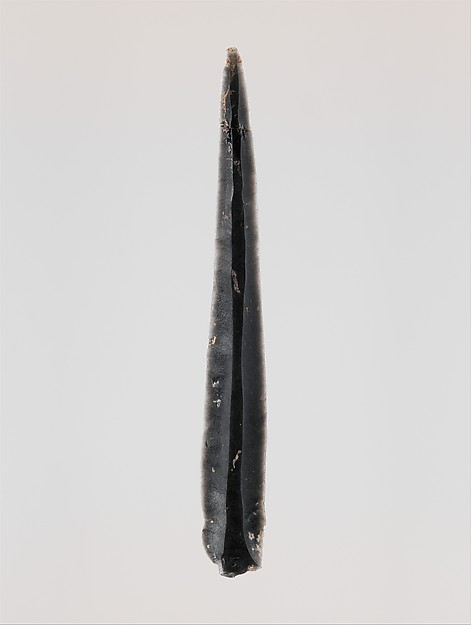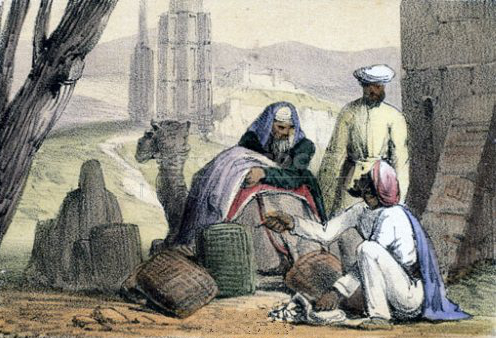
For most of the human story, there was no such thing as money. No coins jingled in pouches, no bills changed hands, and no banks kept ledgers of debts owed. Yet people still managed to move goods across astonishing distances: seashells from one coastline turning up thousands of miles inland, obsidian blades crossing mountain ranges, and ornamental stones passing from hand to hand through dozens of communities that never met one another directly. Archaeologists and anthropologists who study these patterns generally agree that long before any form of currency existed, humans had already built sophisticated systems for exchanging goods, built on reciprocity, social obligation, and trust rather than on coins or bills.
Exchange Rooted in Relationships, Not Prices
Many researchers who study early exchange caution against assuming that pre-currency trade worked like a simple swap of one object for another in the way a modern flea market might. Anthropological fieldwork among societies that continued practicing non-monetary exchange into the twentieth century suggests that gift-giving and reciprocity, rather than one-time barter, were often the primary mechanisms. In many of these systems, a person who received a gift was expected to reciprocate later, sometimes with something of greater value, which built ongoing social bonds rather than settling a transaction on the spot.
One of the most studied examples is the kula ring, a network of ceremonial exchange documented in the islands off the coast of Papua New Guinea in the early twentieth century, in which shell valuables called mwali and soulava traveled in a large circuit among island communities. The objects themselves carried prestige and history, and their movement reinforced alliances, status, and trust between communities separated by open water. While the kula ring was recorded relatively recently, many scholars believe it reflects exchange practices with much deeper roots, offering a window into how older, undocumented systems might have functioned.
Archaeological evidence points to similarly old patterns elsewhere. Obsidian, a volcanic glass prized for its sharp cutting edge, has been found at sites in the Near East and Anatolia hundreds of miles from its geological source, with some archaeologists estimating this long-distance movement extends back more than nine thousand years. Because obsidian can often be chemically traced to specific volcanic outcrops, researchers can reconstruct exchange routes with unusual precision, even when nothing else about the people who carried it survives in the record.
Barter, Debt, and the Limits of the "Simple Swap" Myth
Economic textbooks have long told a simplified story in which money was invented to solve the supposed inefficiencies of barter, since a farmer with surplus grain and a toolmaker with surplus axes would otherwise need to find each other at exactly the right moment. Many economic historians and anthropologists now argue this story oversimplifies the past. Fieldwork and historical records suggest that direct, spot-barter between strangers was relatively rare as the primary engine of early exchange. Instead, communities more often relied on systems of credit, obligation, and memory: a hunter might share meat with a neighbor with the understanding that a favor would be returned at an unspecified future date, and a village might track such obligations informally for years.
These credit-like relationships required small, stable communities where reputations mattered and people expected to interact again. Trust was the real currency, in a sense, and it worked best where social consequences for failing to reciprocate were severe and well understood. As trade networks expanded to include strangers from distant communities who might never meet again, this trust-based model faced real limits, which is part of why more formal mediums of exchange eventually emerged, including standardized weights of valuable materials and, later, metal currency.
Prestige goods played a distinctive role in many of these networks. Items such as finely worked shell beads, polished stone axes, copper ornaments, and amber moved not primarily because communities needed them for survival, but because possessing and redistributing them signaled status, cemented alliances, and marked important life events such as marriages or burials. Grave sites across Europe, Africa, and the Americas have yielded ornamental goods that traveled hundreds of miles from their points of origin, evidence that exchange networks for non-essential, symbolically loaded items were often as extensive as those for practical materials like flint or salt.
Not Without Costs: Conflict, Inequality, and Coercion
It would be a mistake to romanticize pre-currency exchange as uniformly peaceful or egalitarian. Control over access to valuable materials, such as salt deposits, obsidian sources, or prime hunting and fishing grounds, could become a source of real power, and some researchers argue that competition over control of trade routes and resource access contributed to conflict between communities well before the rise of states or formal armies. Possession of prestige goods could also entrench social hierarchy, since individuals or families who accumulated and redistributed valuable items often gained disproportionate influence, a pattern visible in the unequal distribution of grave goods at many ancient burial sites.
Reciprocity systems, while often framed as cooperative, could also be exploited. A person or lineage that consistently gave more than they received might build obligation and dependency in others, a dynamic some anthropologists have linked to the emergence of early social stratification. Exchange, in other words, was never purely about moving objects from one place to another; it was also a tool through which influence, debt, and even subtle forms of coercion could be exercised within and between communities.
Laying the Groundwork for Markets and Money
The systems described here were not primitive stepping stones on an inevitable path toward money, but durable and flexible solutions to the problem of moving goods across both small and vast distances without formal institutions. They demonstrate that trade, in its broadest sense, is far older than currency itself, and that economic life has always been entangled with social relationships, status, and obligation rather than existing as a purely mechanical exchange of value. When more formalized markets began to appear in places like ancient Mesopotamia, discussed further in the development of markets in ancient societies, they built upon habits of exchange, trust, and valuation that communities had already been practicing for thousands of years. Understanding this deep prehistory helps explain why trade, in every era since, has remained as much a social and cultural phenomenon as an economic one. For a broader view of how exchange practices evolved across regions and periods, the early exchange timeline traces these developments in more detail.