Centuries before the network of routes later romanticized as the Silk Road reached its height, the region now called China was already home to long-distance exchange systems connecting the Yellow River and Yangtze River heartlands to Central Asia, the northern steppe, and societies to the south and west. These early networks moved jade, bronze, salt, cowrie shells, and eventually silk itself across distances of hundreds or even thousands of miles, laying groundwork that later, more famous trans-Eurasian routes would build upon.
Jade, Bronze, and the Networks of Neolithic China
Jade held exceptional ritual and social importance in early Chinese culture, and archaeologists have documented sophisticated jade-working traditions among Neolithic societies including the Hongshan culture of northeastern China and the Liangzhu culture near the lower Yangtze, both generally dated to roughly the fourth and third millennia BCE. Because high-quality nephrite jade sources were geographically limited, with especially prized material coming from the Khotan region of what is now Xinjiang in far western China, finished jade objects and likely raw material moved across considerable distances well before the historical dynastic period, in exchange networks whose exact mechanics remain only partially understood.
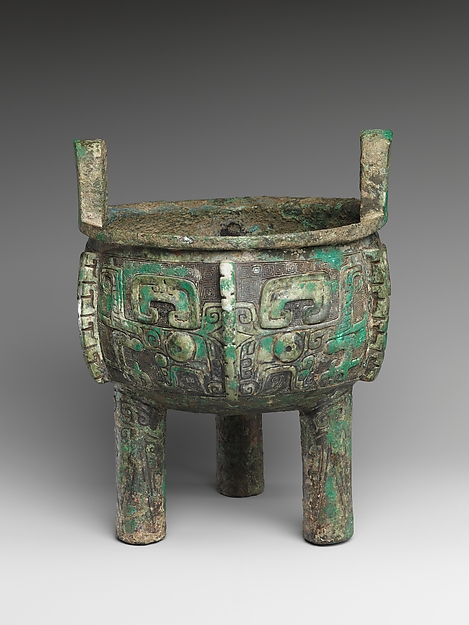
Bronze technology, which many historians believe reached China sometime in the late third or early second millennium BCE, possibly influenced to some degree by contact with communities further west on the Eurasian steppe, depended on tin and copper sources that were not evenly distributed across the Chinese landscape, requiring the Shang dynasty state, generally dated from roughly the sixteenth century BCE, to organize or secure access to metal ores from a wider surrounding region.
Cowrie Shells, Salt, and Southwestern Exchange Routes
In southwestern China, particularly in the region of modern Yunnan and Sichuan, archaeologists have found large quantities of cowrie shells, originating from the Indian Ocean, in burials and hoards dating to the Bronze Age and later periods, indicating exchange networks connecting inland southwestern China to maritime Southeast Asian and South Asian trading systems well before the better-known maritime routes of later centuries. These shells appear to have functioned at various points as a form of currency or high-status valuable, reflecting their origin from a distant and difficult-to-reach source.
Salt production and distribution formed another major strand of early internal Chinese trade, with inland brine wells and coastal salt works supplying a good that every community needed but that only certain regions could produce, encouraging exchange networks that, in later centuries, states would come to tax and regulate heavily.
Steppe Connections and the Roots of the Silk Routes
To the north and west, Chinese states maintained a long and often tense set of relationships with pastoral nomadic peoples of the steppe, including the Xiongnu confederation prominent during the Han dynasty. These relationships combined warfare, diplomacy, and exchange, including the trade of Chinese silk and grain for steppe horses and livestock. During the second century BCE, the Han court sent an official named Zhang Qian on a diplomatic mission westward into Central Asia; while popular accounts sometimes credit this single mission with "opening" trade routes to the west, many historians now emphasize that it was one development among many gradual, multi-directional processes, built on exchange networks that Central Asian, Iranian, and steppe peoples had already been developing for generations, rather than a route created by Chinese initiative alone.
This caution matters because early Chinese long-distance trade, like the obsidian, incense, and amber networks found elsewhere in the ancient world, developed through the combined efforts of many different peoples and polities rather than through the vision of any single state or individual.
Silk's Early and Uncertain Journeys West
Silk production, based on the cultivation of silkworms feeding on mulberry leaves, is generally believed by historians to have developed in China by the Neolithic period, with some sericulture-related finds dated by various researchers to the third millennium BCE or earlier, although the precise origins and timeline remain debated among specialists. Evidence suggests that small quantities of Chinese silk reached societies far to the west well before the Han dynasty's more organized diplomatic and commercial ties with Central Asia, with some researchers pointing to silk fibers identified in Egyptian contexts that have been dated by some studies to the second millennium BCE, though such early identifications are treated cautiously by many scholars given the difficulty of definitively sourcing ancient textile fibers. Whatever the precise timeline, it is reasonably clear that silk, like jade and bronze, moved through a long sequence of intermediary traders and cultures long before any single state organized a continuous route connecting China to the Mediterranean world. This pattern, of valuable goods traveling in relay across many hands rather than along one continuous merchant journey, recurs throughout the early history of Eurasian trade and should caution against assuming that famous named routes represent the moment exchange itself began.
Tribute, Control, and the Costs of Expansion
Chinese dynastic states frequently organized external exchange through tribute systems, in which neighboring rulers and peoples formally acknowledged Chinese imperial authority in return for trading privileges and gifts, a framework that blended diplomacy, commerce, and political subordination in ways that could be burdensome for smaller or weaker participants. Expanding Han control into the western regions and along trade corridors also relied on garrisons, forced labor for building roads and fortifications, and military campaigns against steppe confederations, costs borne disproportionately by soldiers, conscripted laborers, and the populations of frontier regions rather than by the court elites who benefited most visibly from secured trade routes.
Internally, state monopolies on commodities such as salt and, in some periods, iron, could also concentrate the profits of essential goods in official hands rather than allowing open local trade, a tension between state control and commercial freedom that would recur throughout later Chinese economic history.
A Foundation for Centuries of Eurasian Trade
The jade, bronze, cowrie, salt, and steppe-horse networks of early China did not operate in isolation; they laid a foundation of infrastructure, diplomatic precedent, and demand that the more extensive trans-Eurasian routes of later centuries would expand upon considerably. Understanding these earlier, less celebrated networks helps correct a tendency to treat famous later routes as sudden inventions, when they more accurately represent the extension and intensification of exchange patterns many centuries in the making. These overlapping networks, moving jade from the west, bronze technology possibly influenced by steppe contacts, cowrie shells from Southeast Asian and Indian Ocean waters, and eventually silk westward, together demonstrate that ancient China's economy was deeply interconnected with surrounding regions long before any single, formally named trade route existed. For other early, often underappreciated trade systems, see Obsidian and the World's Oldest Known Trade Networks, or explore the ancient era timeline.