For most of human history, the distance food could travel was limited by how quickly it spoiled. Salting, smoking, drying, and fermenting extended shelf life, but these methods altered taste and texture and worked poorly for fresh meat, dairy, or produce. Natural ice, cut from frozen ponds and lakes and shipped in insulated holds, offered a partial solution from the early nineteenth century onward, particularly in trades supplying American cities, but ice harvesting was seasonal, regionally limited, and could not reliably support cooling across a monthslong ocean voyage. Mechanical refrigeration, developed through the overlapping work of scientists and engineers across Europe, the United States, and Australia from the mid-nineteenth century into the 1880s, solved that problem and in doing so created an entirely new category of global commerce.
The scientific groundwork drew on research into the physics of gas compression and evaporation by multiple investigators, including Jacob Perkins, whose 1834 patent described a vapor-compression cycle, and later refinements by figures such as Ferdinand Carré, Charles Tellier, and Carl von Linde, whose work through the 1850s to 1870s moved mechanical cooling from laboratory demonstration toward industrial reliability. Many historians caution against singling out one of these figures as the inventor of refrigeration, since the technology advanced through incremental improvements to compressors, refrigerants, and insulation made by many hands across several countries.
From Experimental Cargo to Established Trade
Turning laboratory refrigeration into a dependable method for preserving cargo at sea took considerable additional engineering, since shipboard machinery needed to run continuously for weeks under rolling conditions far harsher than a stationary factory. Early attempts to ship refrigerated meat in the 1870s met with mixed success; some voyages failed when machinery broke down mid-crossing, spoiling entire cargoes. The breakthrough commercial voyages are generally placed in the late 1870s and early 1880s, when shipments of frozen meat from Argentina and from Australia and New Zealand to Britain succeeded reliably enough to establish regular trade, and various sources place the first fully successful frozen mutton shipment from Australia to Britain in 1880, though accounts differ somewhat on which specific voyage deserves that distinction.
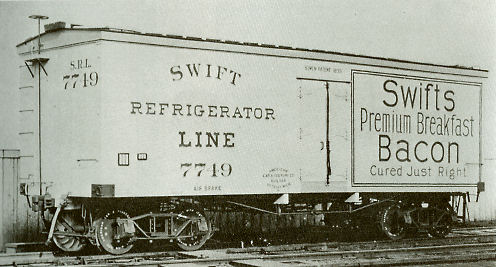
Once the technology proved dependable, refrigerated shipping expanded rapidly. Argentina and Uruguay became major exporters of frozen and later chilled beef to European markets, reshaping their national economies around cattle ranching for export. Australia and New Zealand built substantial trade in frozen lamb and mutton, while the United States developed refrigerated rail cars, pioneered through the work of meatpacking firms including those associated with Gustavus Swift in Chicago during the 1870s and 1880s, that allowed dressed beef to travel from Midwestern slaughterhouses to East Coast cities without spoiling, undercutting the earlier practice of shipping live cattle long distances by rail. This rail innovation connects directly to the broader expansion of inland trade discussed in railroads and the expansion of inland trade, and the ships that carried refrigerated cargo across oceans depended on the same steam propulsion advances covered in steamships and the transformation of maritime commerce.
Reordering Who Produced and Who Consumed
Refrigerated trade reorganized global food geography. European consumers, particularly in Britain, gained access to cheap meat and dairy from distant pastoral economies, which lowered food costs for urban working populations but simultaneously undercut domestic farmers who could not compete with imported meat prices. Agricultural regions in the Southern Hemisphere and the Americas reoriented their economies toward export production for distant markets, a shift that brought capital investment and infrastructure but also tied local livelihoods to the price fluctuations and trade policies of importing nations far away. Dairy and fruit trades followed similar patterns somewhat later, as improved refrigeration allowed butter, cheese, and eventually fresh fruit to cross oceans in marketable condition, expanding the range of New Zealand dairy and Mediterranean and Californian produce into new markets.
Cold storage infrastructure on land grew alongside refrigerated shipping, as port cities built large cold-store warehouses to hold frozen and chilled cargo between unloading and distribution, and urban retailers gradually adopted refrigerated display cases and iceboxes that let households keep perishable food longer than before. This land-based cold chain was just as essential to the trade as the shipboard machinery itself, since a cargo that thawed or spoiled while awaiting distribution in a crowded port was as much a loss as one ruined mid-voyage. Insurance companies, wholesalers, and municipal health authorities all developed new practices specifically to manage this unfamiliar category of perishable, long-distance commerce, including inspection regimes meant to catch spoiled or improperly handled meat before it reached consumers.
The labor and social costs of this transformation were considerable. Meatpacking work in Chicago and similar centers became notorious for dangerous, grueling conditions, documented extensively in public health investigations and popular exposés around the turn of the twentieth century, and the industrialized, assembly-line approach to slaughter that refrigeration helped make economical was built substantially on low-wage immigrant labor with little job security. Pastoral economies that expanded rapidly to meet export demand, including sheep and cattle ranching in Argentina and Australia, also frequently expanded onto land taken from Indigenous peoples, displacing existing communities and land uses to make way for export-oriented agriculture. Smallholder farmers and local food producers in some regions found themselves undercut by cheaper imported staples, a tension that recurred across many communities integrated into refrigerated global trade.
Environmental and Public Health Dimensions
Early mechanical refrigeration relied on refrigerants, including ammonia and sulfur dioxide, that were toxic or flammable, posing safety risks to workers and occasionally to the public before safer synthetic refrigerants were developed in the twentieth century, a later chemical innovation that itself eventually raised separate environmental concerns regarding atmospheric ozone that are well documented in environmental history. The expansion of pastoral export economies associated with refrigerated meat also intensified land conversion for grazing in several regions, with long-term ecological consequences that scholars continue to study. On balance, however, refrigeration delivered substantial public health benefits by making fresh protein and dairy more widely available and by reducing reliance on heavily salted or otherwise preserved foods, which some nutritional historians associate with improved diets in industrializing cities.
Lasting Significance for Global Trade
Refrigeration accomplished something genuinely new in trade history: it converted highly perishable goods into commodities that could be stored, shipped, and traded across oceans on a predictable commercial basis, comparable to grain or coal. This made possible today's extraordinarily integrated global food system, in which fresh produce, meat, and dairy routinely travel thousands of miles between harvest and table, supported by an infrastructure of refrigerated ships, trucks, and warehouses that descends directly from those first reliable frozen-meat voyages of the 1880s.
That system has delivered real gains in food availability, dietary variety, and reduced waste from spoilage, while also concentrating agricultural production in export-oriented regions, exposing farmers worldwide to volatile international markets, and imposing environmental and labor costs that are still being reckoned with. Refrigeration's history illustrates a pattern common to many trade-transforming technologies: it solved a genuine logistical problem in ways that expanded consumer choice and lowered prices, even as it redistributed economic risk and hardship onto producers, workers, and ecosystems far from the consumers who ultimately benefited.