When Mongol armies under Genghis Khan and his successors swept across Eurasia in the early thirteenth century, they left behind, by many contemporary accounts, a trail of destroyed cities and enormous loss of life. Yet within a generation, the same conquests had produced something unusual in premodern history: a single political framework stretching from the Pacific coast of China to the Black Sea and the edges of Eastern Europe, within which merchants, missionaries, and diplomats could travel overland with a degree of security that had rarely existed before. Historians often call this period, lasting roughly from the mid-thirteenth to the mid-fourteenth century, the Pax Mongolica, or Mongol Peace, and it coincided with a significant revival of long-distance overland trade along the routes collectively known as the Silk Road.
Conquest, Consolidation, and the Creation of a Continental Trading Zone
The Mongol conquests under Genghis Khan (who many sources suggest unified the Mongol tribes around 1206) and his descendants eventually produced four major successor states, often called khanates: the Yuan dynasty in China, the Ilkhanate in Persia and the Middle East, the Golden Horde in the Russian steppe, and the Chagatai Khanate in Central Asia. Although these khanates fought each other at times and gradually drifted apart politically, they shared administrative practices, a common interest in taxing trade rather than destroying it, and often cooperated to protect the routes connecting their territories. Mongol rulers established relay postal systems (known as the yam), standardized routes with way stations offering food, horses, and shelter, and in many cases offered reduced tariffs or formal protection to merchants carrying appropriate documentation. This infrastructure, built initially for military and administrative communication, also served commercial travelers moving goods across thousands of miles of steppe, desert, and mountain terrain.
Specific hub cities anchored this network: Tabriz in Persia, Samarkand and Bukhara in Central Asia, Kashgar on the edge of the Tarim Basin, and Karakorum, the Mongol capital, all grew as waypoints where caravans exchanged goods, repaired equipment, and arranged onward transport. The Mongol elite also relied heavily on a merchant partnership system known as ortoq, in which rulers and nobles supplied capital to traveling merchants, often Muslim or Uighur traders, in exchange for a share of profits; this arrangement tied the political elite's own fortunes directly to the success of long-distance trade and gave merchants unusual access to Mongol courts. Such arrangements meant that commerce was not merely tolerated under Mongol rule but actively woven into the structure of the state itself.
Merchants, Missionaries, and Diplomats on the Reopened Silk Road
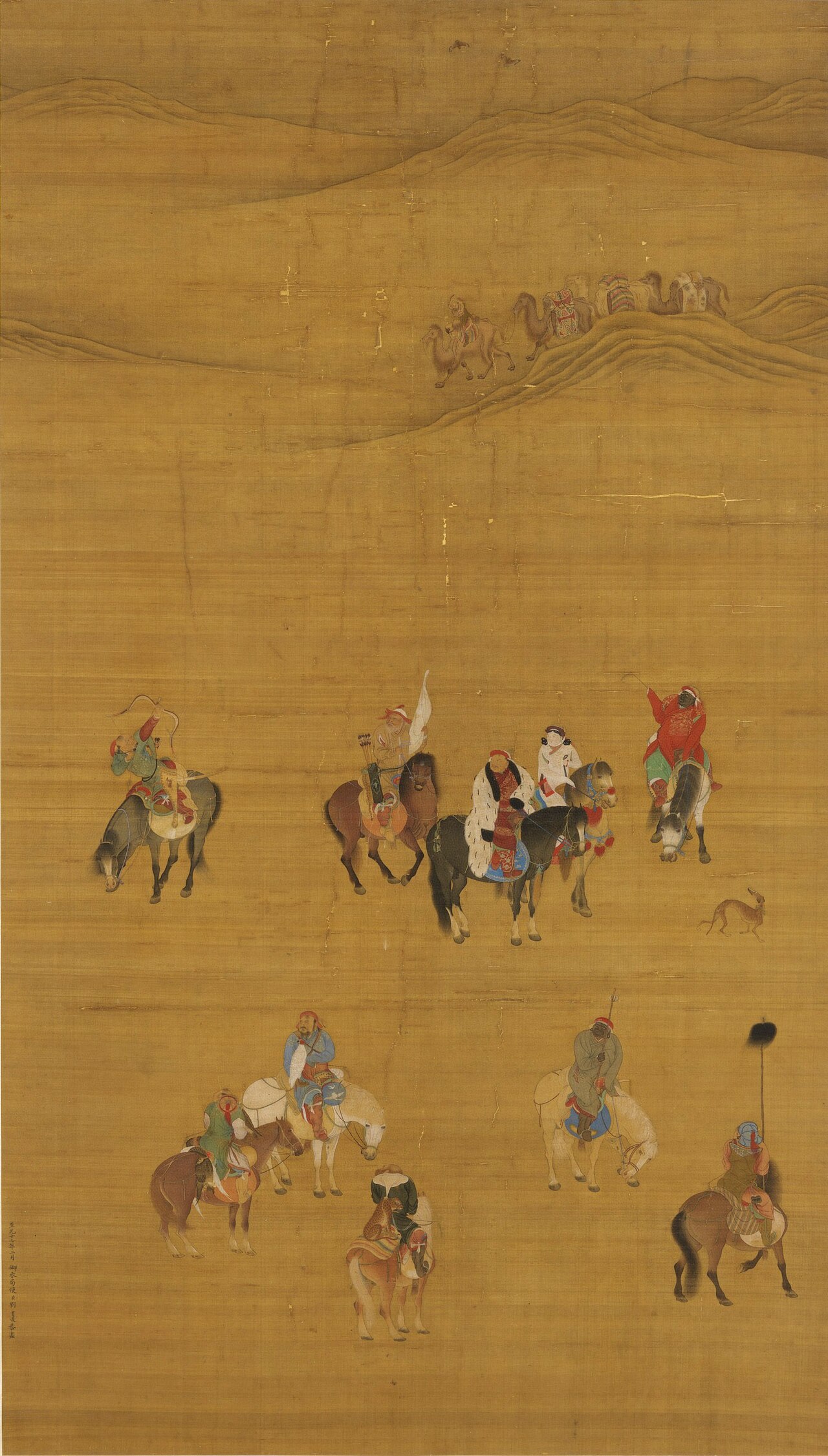
The relative security of Mongol-controlled territory encouraged a wave of long-distance travel that left behind some of the most detailed surviving accounts of medieval Eurasia. Venetian merchant Marco Polo's account of years spent in and around the Mongol-ruled court of Kublai Khan is the best known of these in the Western tradition, though it represents one individual's experience—filtered through later editors and co-authors—rather than a complete picture of Silk Road travel. Other travelers moved in the opposite direction: the Nestorian Christian monk Rabban Bar Sauma journeyed from China to Europe in the 1280s, and Franciscan missionaries such as William of Rubruck and John of Montecorvino traveled east to Mongol courts seeking converts and diplomatic ties. These individual journeys were possible only because of a much larger, largely anonymous infrastructure of caravan organizers, translators, guides, pack-animal handlers, and local merchants who made overland Eurasian travel functional; crediting any single traveler with "opening" these routes overstates one person's role in a system built by many hands over centuries.
Diplomatic contact ran in multiple directions at once: European rulers and the papacy sent several missions seeking alliance with the Mongols against shared Muslim rivals in the Middle East, while Mongol rulers in turn dispatched their own envoys westward over the preceding decades. None of these diplomatic overtures produced the lasting military alliance either side sometimes hoped for, but they nonetheless widened the circulation of geographic, religious, and commercial knowledge between Europe and Mongol-controlled Asia.
Goods, Technologies, and Ideas in Transit
Caravans crossing Mongol territory carried a wide range of goods: Chinese silk, porcelain, and paper; Central Asian horses and furs; Persian and Indian textiles, spices, and gemstones; and increasingly, technical knowledge that traveled alongside material goods. Printing techniques, gunpowder formulas, certain mathematical and astronomical knowledge, and administrative practices moved across Eurasia during this period, sometimes carried by captured artisans whom Mongol rulers deliberately relocated to serve at distant courts—a practice that extended Mongol conquest's disruptive, coercive character even into the exchange of ideas. Credit for many "transfers" of this kind is difficult to pin down precisely, and historians continue to debate exactly how and when specific technologies spread; what is clearer is that the scale of exchange during this period was unusually large for the premodern world.
The Price of Peace: Violence, Disease, and the Limits of Mongol Rule
The Mongol Peace should not be romanticized. It followed decades of conquest in which, according to various chroniclers whose numbers modern historians treat with caution, enormous numbers of people died in sieges and campaigns from China to Eastern Europe, and entire cities such as Baghdad, Merv, and Kiev suffered catastrophic destruction. Mongol rule also relied on forced population transfers, heavy tribute extraction, and brutal suppression of resistance. Perhaps most consequentially, the same trade and communication networks that carried silk and spices also appear, by the estimation of many historians, to have helped carry the bacterium responsible for the Black Death from Central Asia toward the Crimean port of Caffa in the 1340s, from which it spread into the Mediterranean and across Europe, killing an estimated one-third or more of the European population within a few years. Increased connectivity, in other words, carried both opportunity and catastrophe along the same roads.
Fragmentation and the Silk Road's Enduring Legacy
By the middle of the fourteenth century, the Mongol khanates were fracturing under internal succession disputes, regional revolts, and the same plague that devastated Europe. The Yuan dynasty fell to the Ming in 1368, and overland routes gradually became less secure and more fragmented among competing regional powers. This disruption is one of several factors historians point to in explaining why states later invested so heavily in finding alternative sea routes to Asia, a search explored further in our article on Zheng He's Treasure Fleets and Ming China's Maritime Reach, and one that eventually intersected with the Mediterranean trading networks described in our piece on Venice, Genoa, and the rivalry for Mediterranean trade. Even so, the century or so of unusually open overland exchange under Mongol rule left a lasting mark on global trade history, demonstrating both how much a single political order could accelerate long-distance connection across Eurasia, and how quickly and violently such connection could also transmit catastrophe. For more on this period, see our broader medieval trade timeline.